
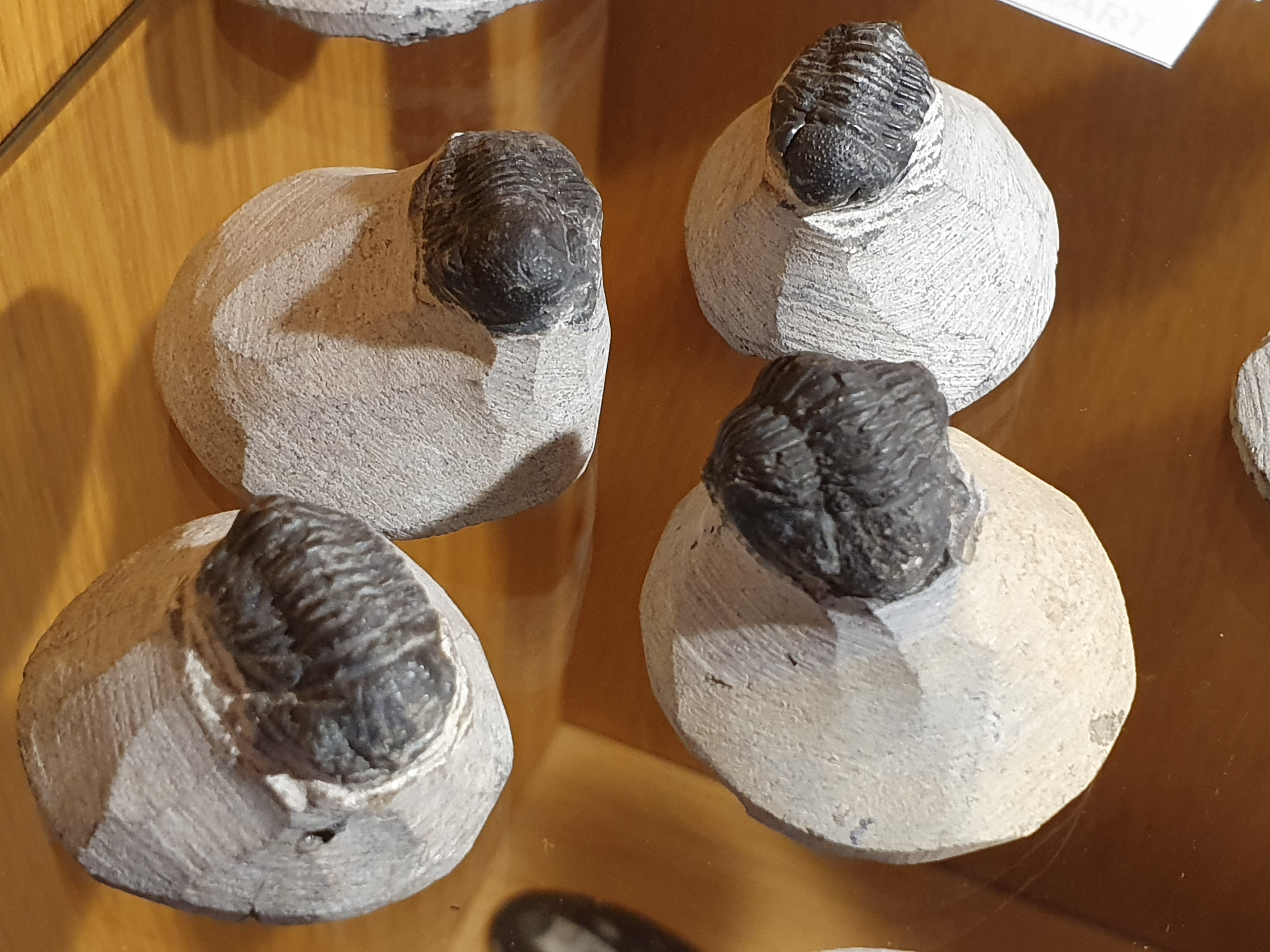
Trilobite on matrix, Morocco
165 SEK per PC
- Secure payment by card
- E-mail us, we reply swiftly!
- These rows can be edited \*
\* Edit these rows under Content > Article page
Description
Article no.: 62-547
Proteus
, Devon (360 million years)
Alnif, Morocco
Trilobite fossil on limestone from Morocco
Trilobites lived before the age of the dinosaurs. They first appeared early in the Cambrian Period and became extinct at the end of the Permian Period, approximately 250 million years ago. They have likely been so well preserved due to their hard outer shell. In only a few places in the world have they been found with soft tissues still intact.
Depending on the site-specific mineral composition and the structure of the fossil-bearing strata, they vary in rock composition, surface texture, color, and so on. In the Anti-Atlas region of Morocco, they are most often found in fragments, so these specimens are usually glued together
The name “trilobite” means “three lobes.” The trilobite is also divided lengthwise into three parts: the cephalon (head), the thorax (body), and the pygidium (tail).
Trilobites were index fossils and are said to be the first animals to develop eyes. They had compound eyes and lived on the ocean floor.
It has been called the Cambrian Explosion, as shell-bearing fossils are found in strata dating back to the Cambrian Period (approx. 540 million years ago), and it is at this time that biological evolution on Earth is said to have taken off. The Devonian is said to have been a golden age for trilobites, during which they spread widely across the Earth. In geological strata, certain fossils that lived during a limited time period can be identified; these are called index fossils. If an animal, such as a trilobite, left behind traces that have since fossilized, these are called trace fossils. Another name for trace fossils is “rusofykus.”
These trilobites have been prepared and remain embedded in their parent rock, in this case limestone. Their size varies, but trilobites are usually between approximately 1 and 2 cm.
- Suggested age groupAdult (typically teens or older)